Session 4
4.0Overview
Wave Function Collapse in Grasshopper
27 Nov 2026 · @Paul
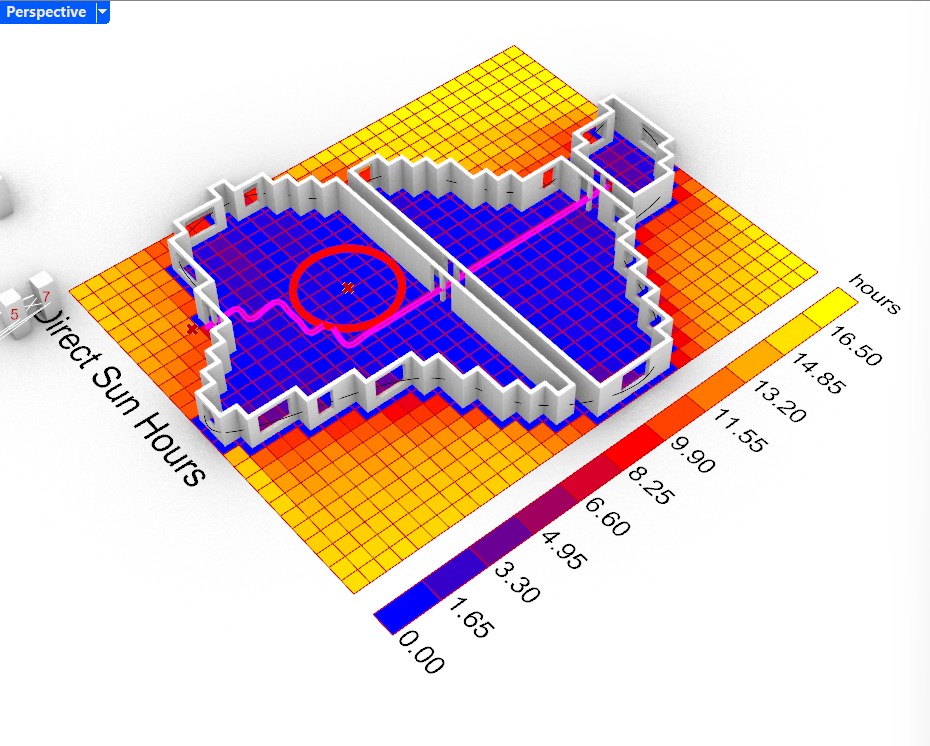
The aim of this session is to introduce you to the concept of Wave Function Collapse and with a general overview of how it works. We will then build a pipe network that designs itself using WFC in Grasshopper with no third party dependencies.
Prerequisites
Comfortable with Grasshopper lists and sliders. Reading C# helps in the second block of this lesson, when the code is walked through, but is not needed to use the components.
By the end, you should be able to:
- Explain superposition, collapse, propagation and contradiction in their own words.
- Describe a tile set as sockets, and predict which tiles may touch.
- Change the tile set and weights to steer the character of the result.
- Place their own geometry on the solved grid with native Grasshopper components.
Files
In this session
4.1 What is WFC?
Superposition, collapse, propagation and contradiction.
4.1 Tiles across the grid
Sea, coast, land and forest, then rectangular and hexagonal tiles.
4.2 Intertwining analysis
A room of wall tiles, and a sunlight-hours analysis.
4.4 Dungeons and in 3D
A 3D dungeon maze, solved for the shortest path.
Further reading
Where the algorithm comes from.